How to Combine Alternative Therapies with Mainstream Healthcare for better results 👩⚕️
Welcome back to The Microdose Diet a newsletter about personal and professional growth using alternative medicines, such as microdosing psychedelics. 🍄
I wrote and spoke quite a bit about my doubts regarding the healthcare system in North-America and Europe. My cynicism is mostly due to the massive conflicts of interest and incoherence existing in the space, making patients’ best interest, more often than not, an after-though. If you want to see an extreme example of that dynamic I recommend the drama Painkiller which explores America's opioid epidemic.
Regardless of this very dire state of affairs, medical professionals still hold clout with most patients. This is why the power of the white coat could and should be harnessed to put back patients’ health and wellness at the center of the equation. Health workers may not be able to change the systemic flaws of the healthcare machine but they can use their considerable influence on the people they care for to maximize their chances of recovery.
From the placebo effect, to psychedelics, tapping meditation, autosuggestion, NLP, and visualization, medical professionals have an array of alternative medicines at their disposal that they are not using enough, or at all, to help their patients heal better and faster. Considering the power of their authority it is a missed opportunity for everyone. Below are some of the tools that could easily be incorporated to improve the results of our healthcare system. And great news for the taxpayers, they are free or cheap💸
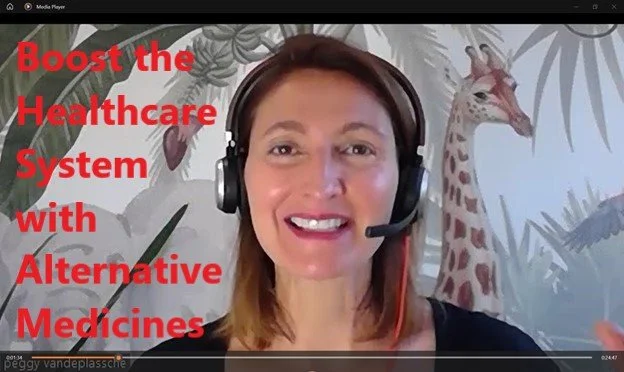
Watch or listen to the recordings.
🍄Psychedelics
Even if psychedelics have been seeing the time of day through the Psychedelics Renaissance and now the Psychedelics Gentrification, they are still not studied in health schools, leaving tremendous opportunities for improved healing unexplored.
I have written quite a bit on psychedelics, especially microdosing psilocybin, as FMP, psychedelics is the most exciting re-discovery of the century. They could usher humanity in a entirely new territory via optimized mental health, improved performance and enhanced connection with oneself and others.
In my book, “MORE! The Microdose Diet, The 90 Day Plan for More Success, Passion and Happiness”, 5 chapters are dedicated to “Your Psychedelic Education” (the name of the section so far 😁). This is more than what health professionals will learn during their studies based on the current curriculum! This doesn’t make any sense.
Hundreds of clinical studies are actually underway globally, some with first-class organizations such as the Department of Veterans Affairs in The US and in Canada, on topics such as addiction, anxiety, arthrosis, clustered headaches, mood disorders, PTSD, and stress.
Billions of dollars have been poured in what has been called the next frontier in healthcare, but the majority of medical professionals has very limited knowledge of these centuries-old alternative medicines. And thus, despite regulations changing at the speed of light and a tremendous level of activity in the space.
The beauty of psychedelics is not only the enormous amount of data (both anecdotal and scientific), but also their affordability. It is extremely cheap to access psilocybin (magic mushrooms) of excellent quality. Displacing expensive, loaded with side-effects, symptom-managing, manufactured drugs with affordable, natural, cure-focused alternative medicines is a no-brainer when putting patients’ health and well-being first.
Incorporating psychedelics in medical curriculums, as well as in health and wellness medicine cabinets, will benefit our healthcare system and more importantly the health of patients, while managing down the costs. Some M.D.s, such as Gabor Mate, are big supporters of the use of psychedelics for healing.
As discussed with Victoria Litman, Lawyer, Scholar and Advisor, public access to psychedelics will be coming from multiple ways; medical, religious, self-administered. However we cannot underestimate the power of the medical establishment and it will have to be roped in sooner rather than later when it comes to the use of psychedelics for healing.
🖐️ Tapping
Tapping is a powerful stress relief technique, often referred to as an alternative therapy for anxiety, post-traumatic stress disorder (PTSD), and other conditions. By tapping on certain meridian points with your fingertips you can restore balance in your body and mind to resolve physical and emotional issues. Researchers have shown that EFT Tapping lowers cortisol (the stress hormone) by 43%.
I am a huge proponent of tapping meditation, especially in combination with microdosing psychedelics (1+1=3!). I am working with a fabulous coach, Pam Wright, with weekly / bi-weekly sessions to focus on my blind spots. Tapping has created marvelous positive changes in my life and I can not recommend it more! You can read about it there.
Dr. Kim D’eramo is a very interesting M.D. using tapping to help her patients heal. After a stint as an emergency doctor it became clear to her that all of the patients she saw with chronic illness had a component of emotional and mental energies keeping their disease state in place. Accordingly she has shifted her career and became a MindBody Medicine Physician. She now helps patients with a vast array of conditions; anxiety, autoimmune illness, chronic pain, fatigue, migraines and much more.
Tapping is an ideal tool to help release pain and stress; it is free, easy, safe, and portable😁 Nonetheless, this alternative therapy is not used by the traditional medical establishment, despite, here again, the scientific backing. Dr. D’Eramo recounts stories of using tapping in the E.R. and witnessing significant decrease in pain level in just minutes. These experiences were due to her own volition; no training, nor protocol, were indeed in place for health professionals to leverage this tool. Once again a missed opportunity for the patients, the healthcare systems and the tax payers.
💉 The Placebo Effect
You are certainly very familiar with the placebo effect that can roughly be defined as a sham medical treatment, such as tablets, injections, or surgeries. Placebos are used in randomized clinical trials to test the efficacy of medical treatments, and you can find reference to hundreds of examples of placebo effects.
I have personally always enjoyed the reference to this study from the Department of Veterans Affairs (VA) and Baylor College of Medicine in 2002. In this research, some patients received the “real” knee surgery, while others only received a small incision on their knee to make them believe they were operated on. The punch line is “Study Finds Common Knee Surgery No Better Than Placebo.” Or in more details, patients with osteoarthritis of the knee who underwent placebo arthroscopic surgery were just as likely to report pain relief as those who received the real procedure.
What these results don’t tell us though is how much the doctors themselves may have influenced these results (unconsciously of course). As presented in this study, “Practitioner characteristics, like empathy, friendliness, and competence, favor the formation of positive expectancies. Caring and warm patient–practitioner interactions can enhance the therapeutic value of clinical encounters when patients’ positive expectancies are actively encouraged and engaged.”
Bottom line, an encouraging medical professional will improve the probability of a successful recovery in a patient. What is not to like?! And may I add that this is free! 😁 Unfortunately the opposite is true too, with what is called the nocebo effect.
What does it mean for you? Work with friendly and supportive medical professionals as much as you can!
I often hear people denigrating the placebo effect especially when it comes to psychedelics, and thus despite centuries of data points. Their rationale being, we are not sure the compound “really” works, psychedelics could totally be placebos. First, if a placebo allows anyone to heal and change for the better, sign me up. Second, hundreds of studies have been demonstrating the actual positive impact of psychedelics. Third, then why have psychedelics been outlawed if they don’t “really” work?! 🤨 In addition, why would the placebo effect be more true for alternative medicines than for prescribed drugs?!
It is very counter-intuitive to me to complain about the placebo effect. This is the safest, and cheapest way to see improvements. Everyone and his neighbor is talking about “mindset”, “changing our mindset”, well this is exactly that! Using the power of our minds to get to the desired health results. Due to their important power of influence health professionals have a tremendous opportunity to leverage the placebo effect when treating patients. Unfortunately, this option is left to the practitioners’ discretion while top-down guidance and widespread use would be beneficial to all.
🧠Autosuggestion or The Coué Method
Autosuggestion is a psychological technique related to the placebo effect, developed by pharmacist Émile Coué at the beginning of the 20th century. It is a form of self-induced suggestion in which individuals guide their own thoughts, feelings, or behavior. Coué’s famous "Every day, in every way, I’m getting better and better" is a pretty well-known formula leveraging the power of the mind for healing.
Unfortunately, I have yet to meet a medical professional using this easy and free method to maximize a patient’s healing. One of my good friends is in the medical field and despite her and her staff fully agreeing with the value of autosuggestion they never took me up on my suggestions to hang posters and play affirmations related to healing success in their clinic.
What I have seen though is the opposite. My mother who has had very bad arthritis for decades was told by a M.D. that “it was surprising that she was not in pain and could live an active life.” Why on earth would anyone in a position of authority say that to a patient?! Obviously it didn’t take long for my mother to start feeling pain in her articulations. 🙄 This is a great example of negative auto-suggestion triggered by a health professional.
I have been fortunate to be in great physical health for most of my life (minus the misdiagnosed brain tumor in my teens💪), nevertheless every time I go for a physical the only thing I hear about are the 1 or 2 data points that are good but not excellent. Guess what?! Just tell me I am in great health, because that is the reality. Don’t point out the one thing that is not perfect. I am not coming to find problems where there are none, nor to be influenced in getting sick.
It would be so easy though for medical professionals to harness the power of positive suggestion and auto-suggestion! Or at least, as a start, to neutralize their negative suggestions. Instead of pushing thoughts of diseases and side-effects to patients, push them thoughts of healing, success, and great health.
I strongly believe in the value of Western Medicine, despite its focus on disease versus health, its incoherence, its massive conflicts of interest and its difficulty of access in North-America (yes, including Canada). However, we, patients, shouldn’t have to choose between alternative and mainstream medicines. One could easily augment the other, improving results and reducing costs. Today, patients (and medical professionals) interested in alternative options are left to their own device to research, train, and access therapies that could provide them with relied and healing. This is not the way to go.
I have not even mentioned many other alternative therapies that exist and would be beneficial to combine to our drug-first healthcare system: hypnosis, journaling, visualization, NLP, homeopathy, acupuncture, shiatsu, breathwork, meditation and naturopathy to only name a few!
We all agree that our minds are very powerful, so let’s make the most of them in a strategic and beneficial way for every last one of us!!
Thank you for reading The Microdose Diet. This post is public so feel free to share it.
Listen to the episode here, on Spotify or Apple Podcasts.
Once you've finished the episode, I’d love to hear your thoughts! Comment to share your views ✍️
P.S. Do you know someone who would enjoy The Microdose Diet podcast? Feel free to share this newsletter by clicking the link below and hitting the ❤️ button on this post to help me support more people on Substack 🙏
About The Microdose Diet
The Microdose Diet by Peggy Van de Plassche focuses on personal and professional development using alternative medicines, such as microdosing psilocybin, tapping meditation, journaling, guided meditation and visualization ✨
I am Peggy Van de Plassche, a former banker and VC who spent 20 years in the financial services and technology industries. I now speak and write about the benefits of alternative medicines, such as microdosing psilocybin, for professional and personal growth. I created The Microdose Diet - the 90 Day Plan for Success and Happiness🍾 My book will be published in 2024.
Thanks for reading, listening, and watching 🙏
Follow me on Twitter & Instagram.
This newsletter is designed to entertain and inform, not provide medical advice. You should always consult your doctor when it comes to your personal health or before you start any treatment 🩺